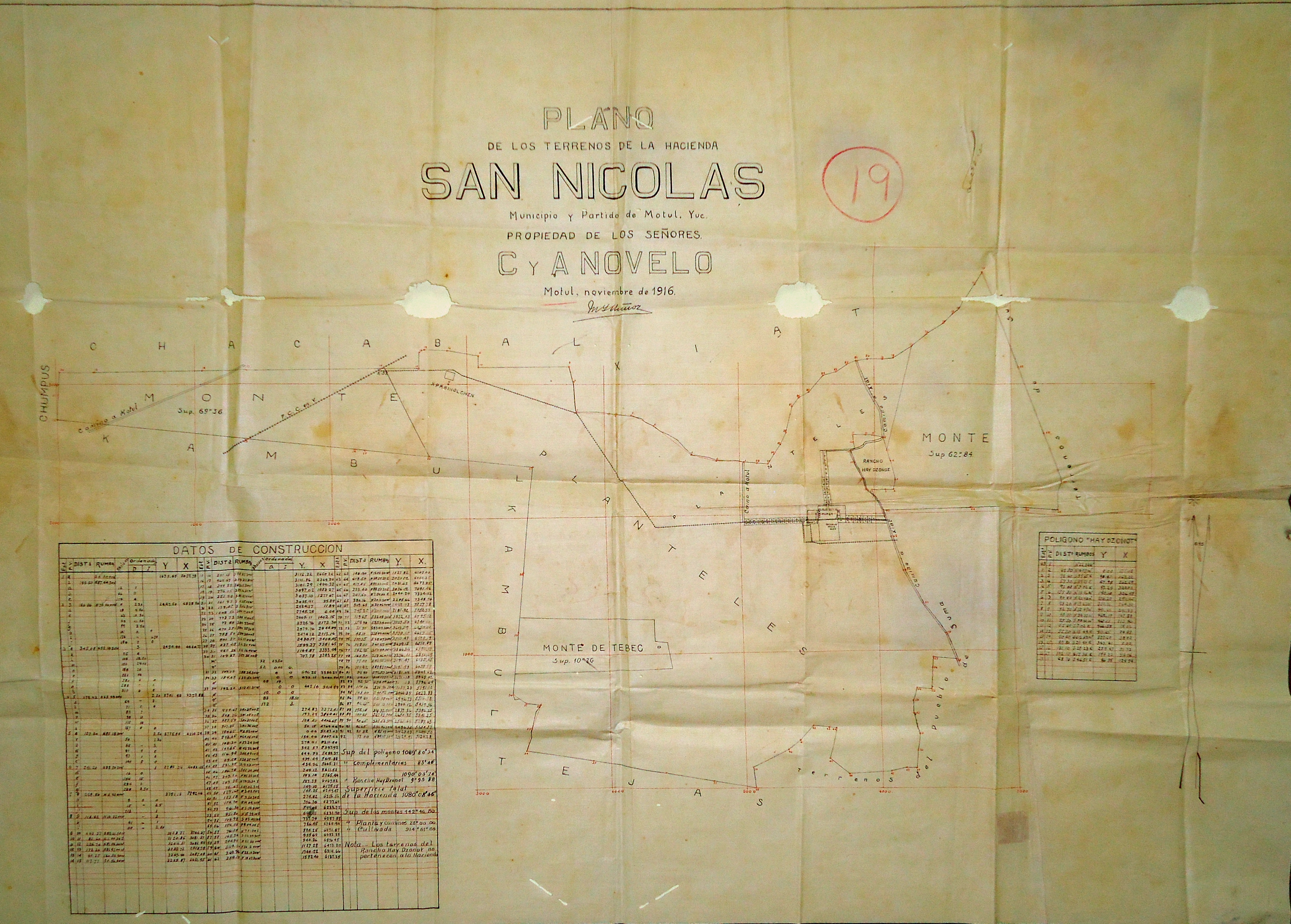
San Nicolás was the plantation that the Novelo Puerto family loved the most. It was the property that gave them more: more experience, more power, more fortune, surely. But the most important thing was that San Nicolás was their second home.
Crescencio and Rita took their first steps as hennequen plantation owners the twenty-fourth of December, 1885, in José Dolores Cámara’s office in the city of Motul. On that day and in that place was when they passed papers on the San Nicolás ranch and its annex, Pakbiholchén.
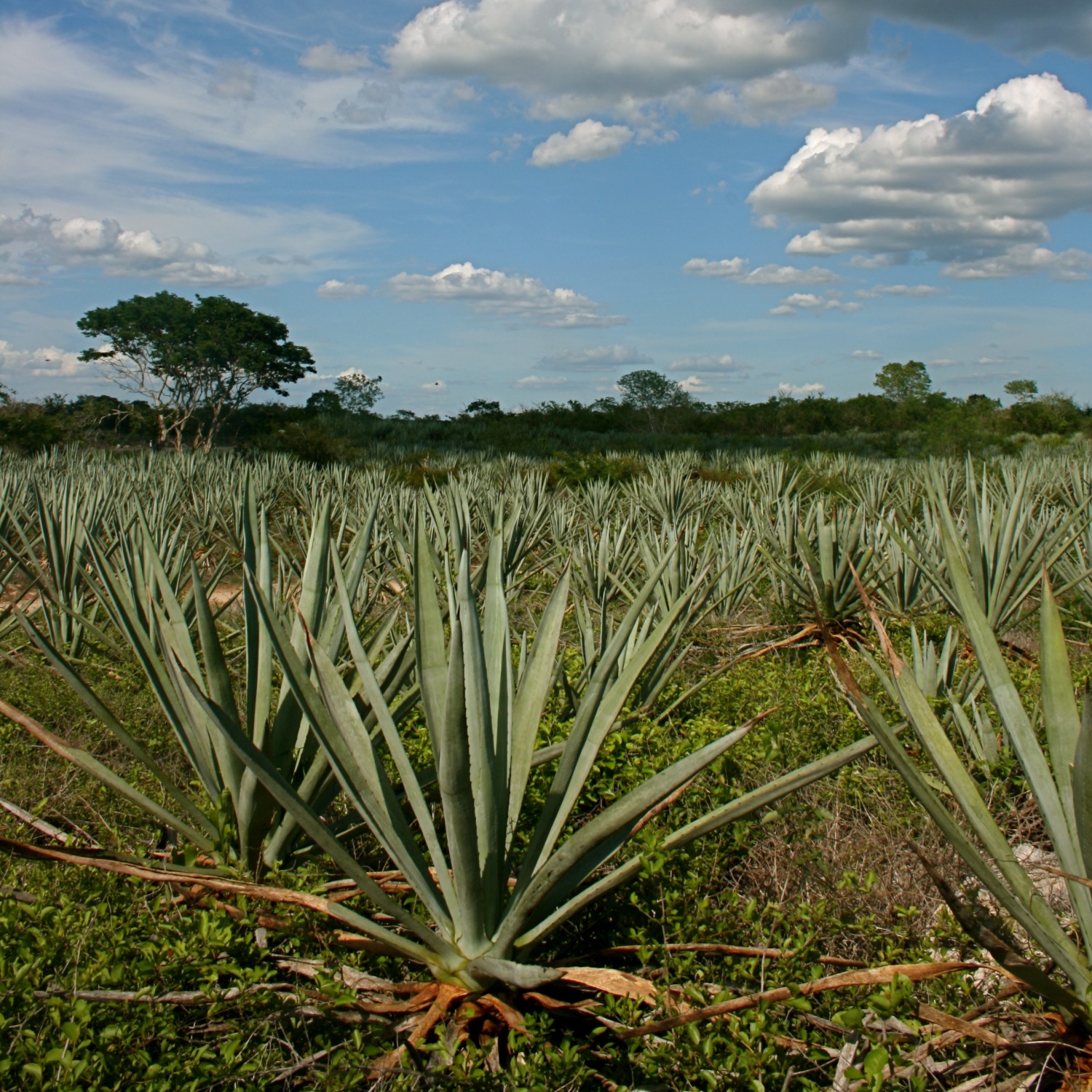
On this property they eventually had more than 120 heads of cattle, six saddle horses, fifty working mules and a honey farm, with 100 cork beehives. For hennequen production, they had a piece of machinery that transformed the agave leaves into fibers. It was inside a wooden and zinc building, which had, attached to it, a semi-fixed Marshal boiler. They had a Vencedora shredding machine, and a two horse-power Worthington pump. They also had a 400-pound press and 3 Aeromotor windmills. The Pichic field was seven thousand mecates in size, or approximately 140,000 meters of hennequen. The Kuichén field had 6,000 meters of hennequen for cultivation.
But to Crescencio and Rita the most important thing about the plantation was the sixty-three families who lived there and who, in one way or another, become part of their own family: the Pools, the Cans, the Peches, the Batúnes, the Mays, the Cehs, among many others. Most of them lived in houses on the three long streets to one side of the plantation.
The main house was very beautiful. Its walls were decorated with yellow flowers. There was a huge central patio with an enormous tree in the middle of it. The most important workers lived around the patio, like the mayocol, overseer of the col, or fields; the general manager; and the schoolteacher. That was also where the guest houses were. San Nicolás had a church, a school, and the building with the machinery, where they transformed the hennequen.
The Novelo Puerto family worked assiduously for many years and they spent so much time in this place that it became their second home. It was there that their children learned how to ride horses, where they had countless parties, where their beloved Marta was born, where they had many happy times with the family, and there, also, where they buried their family members. The Novelo Puerto family left a large part of their legacy in San Nicolás.

 Divine Caste, by Alicia Spinner