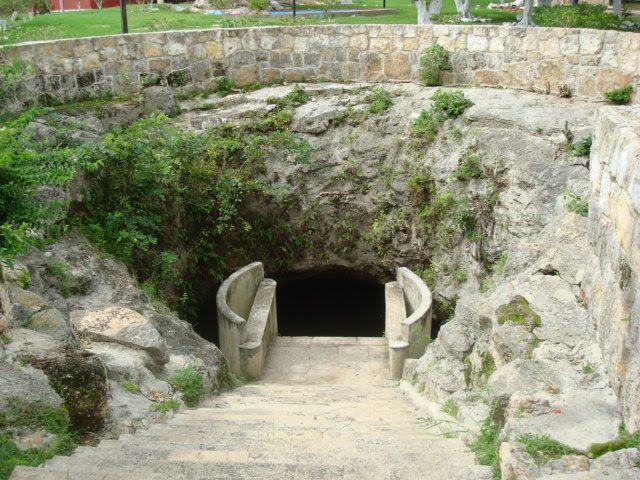
Any time Marta didn’t get what she wanted, she threatened to throw herself into the Ts’ono’ot, or the Sambulá cenote. Perhaps she got the idea from what were understood to be the Mayan rituals at cenotes, ones that involved human sacrifice. In Yucatán, there are thousands of cenotes, or sinkholes, that are like Sambulá.
The waters that flow underground througout Yucatán come to the surface as cenotes. Lacking rivers or lakes, large Mayan settlements tended to form around these cenotes, such that cities and towns grew up around them, too. That’s why the majority of today’s towns have a cenote, which, over time, has become a distinct characteristic of each region. The Sambulá cenote is the cenote of Motul.
Which makes it also the cenote of my story. The cenote of Marta, Rita, Amparo, and Beatriz. The first ones entered it, lighting their way with kerosene lamps, since this particular cenote is a closed one and it has hardly any openings that let the sunlight filter in.
And although Marta never followed through on her threat to throw herself into the Samulá cenote, she did experience, like the other women in my story, the great tranquility that comes from admiring the beautiful waters of the cenote: turquoise, crystal clear, lukewarm. They all went down to this underground cave and found a peaceful refuge there. Mainly during those moments when the rhythm of their lives changed for one reason or another. The Sambulá cenote was always there, ready to welcome them.
 Divine Caste, by Alicia Spinner